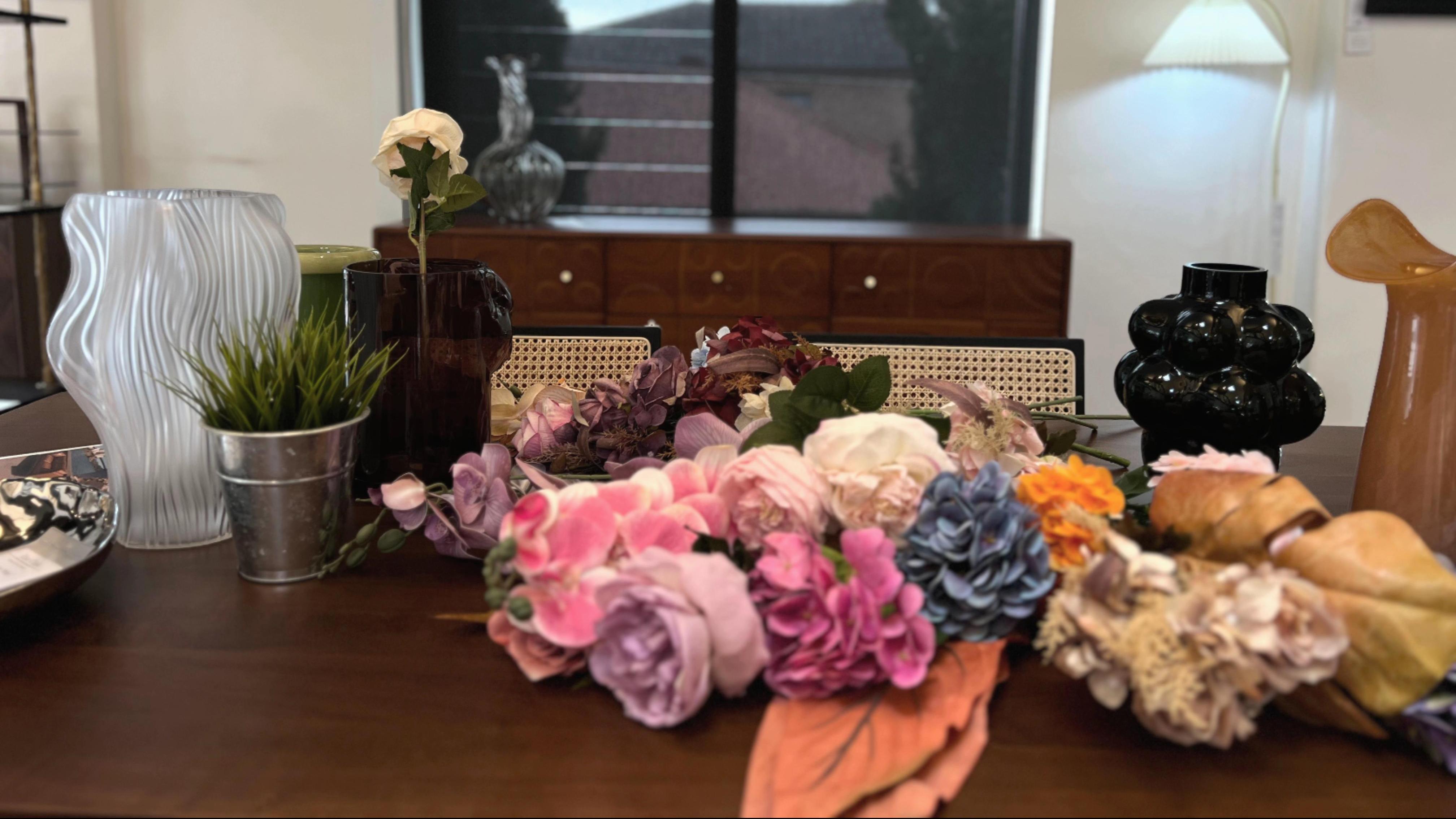
On the afternoon of July 16, 2025, Lux Casa hosted five guests—each with a distinctive sensitivity to spatial and everyday aesthetics—for a quiet, informal creative experiment.
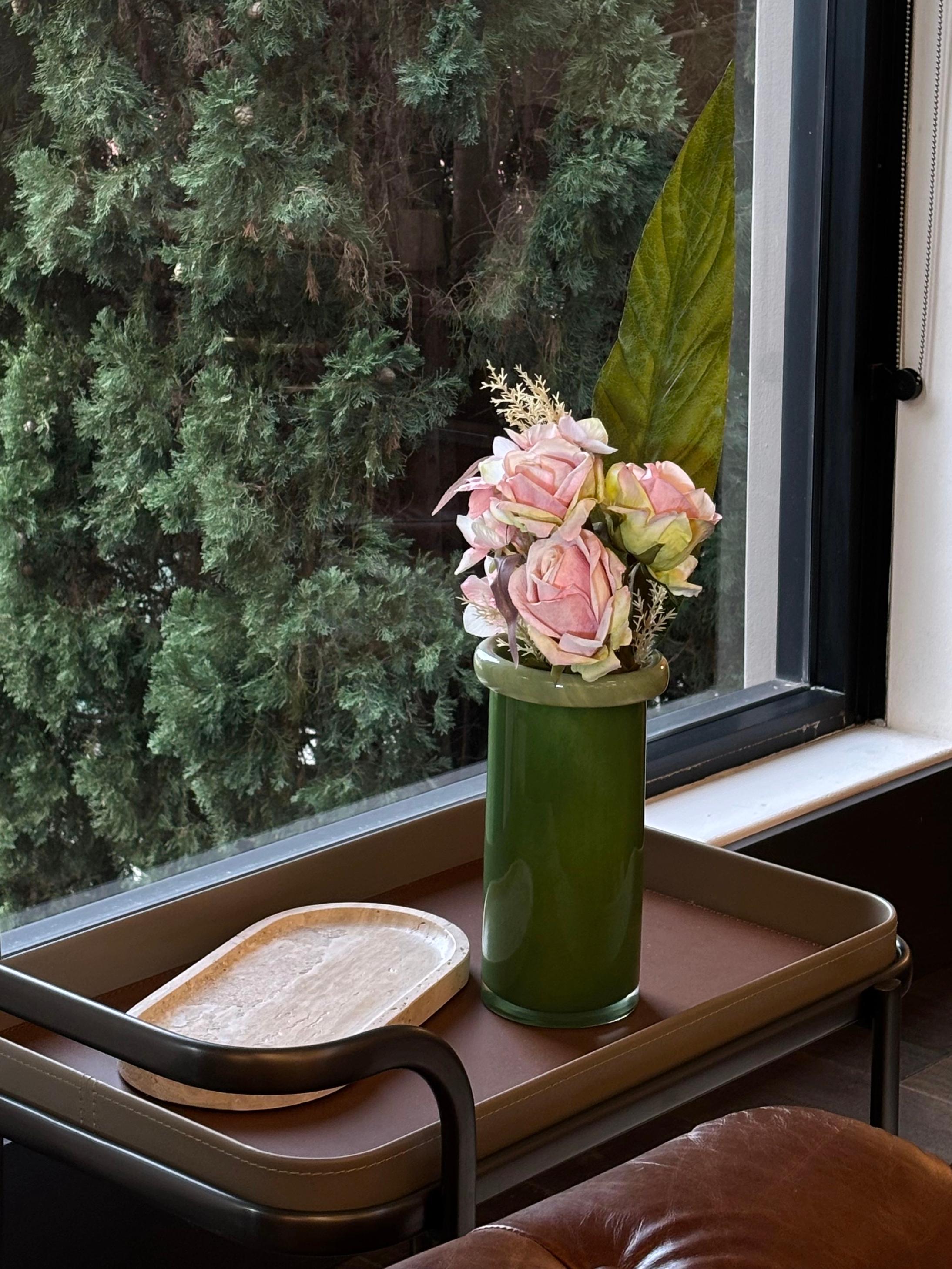
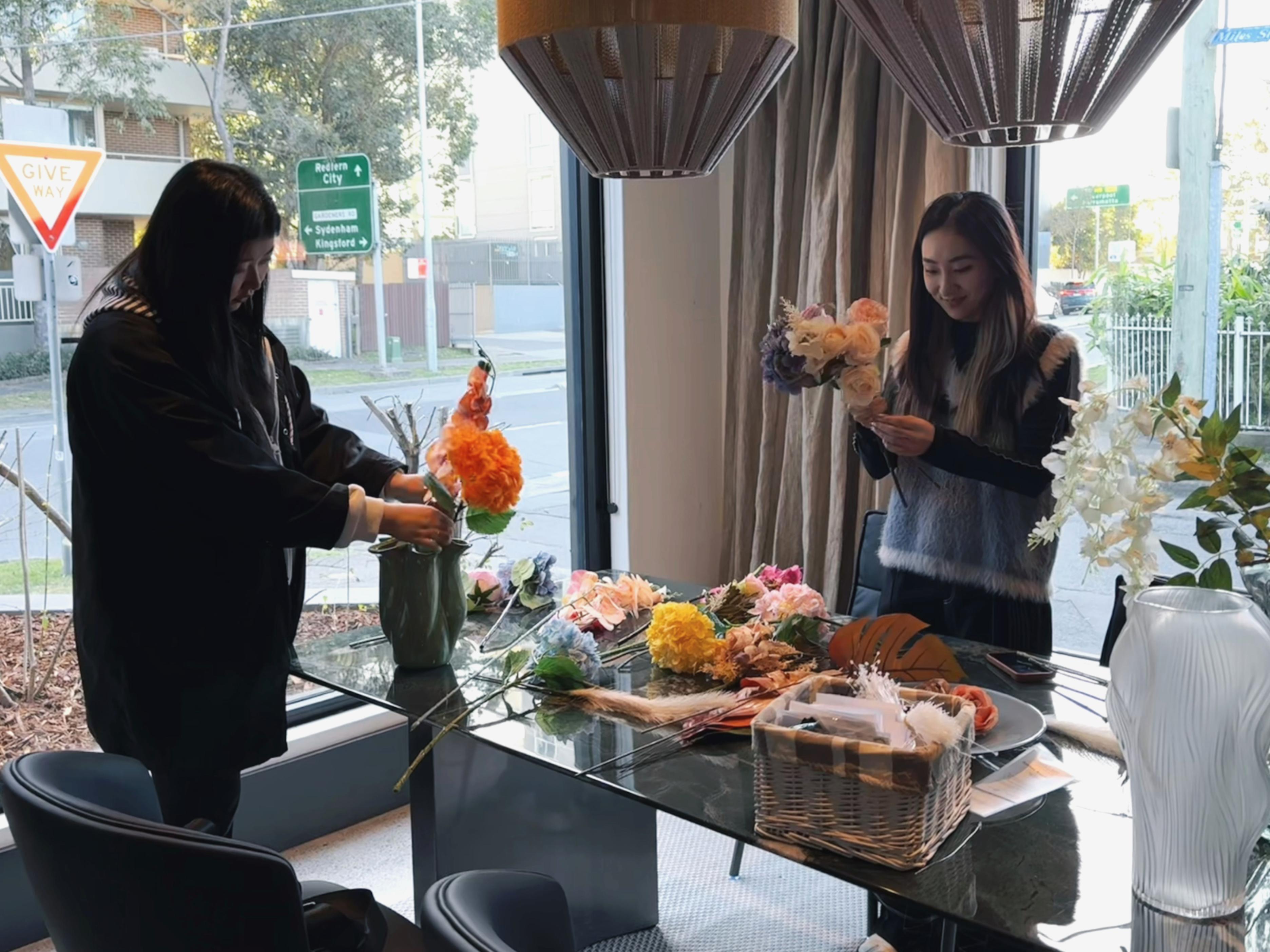
There was no theme, no prescribed style, and no “correct” way to arrange. We simply prepared two things: a wide range of vases in various shapes and textures, and a full table of faux florals. The rest was left entirely open to the participants.
‘Curating space’ became an open-ended question:
If you could use a single arrangement to shift the mood or rhythm of a corner in your home—where would you place it?
We drew inspiration from Studio McGee’s approach to greenery in interiors, which emphasizes subtlety over spectacle. Plants—real or artificial—don’t need to dominate a space. Instead, it’s their placement, scale, and textural contrast that gently shape the mood. Rather than filling every surface, it's about knowing where to pause. As Studio McGee notes, thoughtful restraint allows a room to breathe—inviting rhythm, softness, and a quietly human presence.
- The Vase-Side Philosophy
In traditional Chinese aesthetics, space has never been a passive container, but a living, breathing presence that co-evolves with its occupants. Ming dynasty literatus Yuan Hongdao wrote in his seminal treatise Ping Shi (On Vases) The essence of a floral arrangement lies in its spirit.
Floral placement was never about ornate techniques or display—it was a form of introspective expression through objects, a gentle ritual within daily life.From the Song to the Ming dynasties, the tradition of vase-side florals evolved into a uniquely refined aesthetic: prioritizing spirit over embellishment, and mood over symmetry.Even though faux flowers do not wither, they still deserve to bloom in the right place—somewhere that harmonizes with the character of the room and the temperament of its inhabitant.
- From Vase to Vibe
Spatial aesthetics, we believe, are not built on uniformity of style, but on the authenticity of relationships between people and objects.We were delighted to witness how each participant brought a distinct answer to the table:
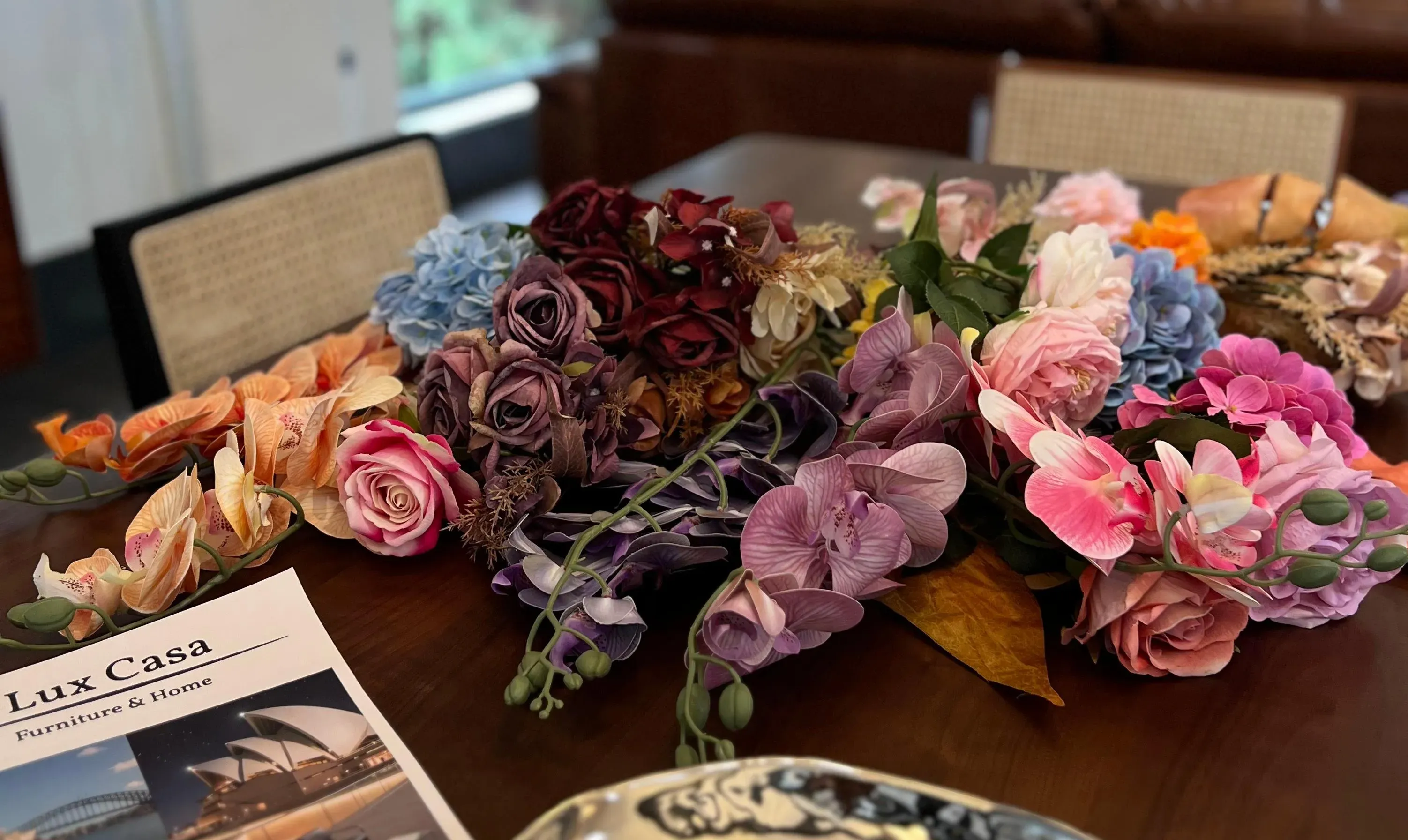
– One placed a pale pink faux rose bouquet in a tall green ceramic vase on a rolling cart by the window. Framed by the deep green trees outside, the scene created a dialogue between interior calm and natural depth.
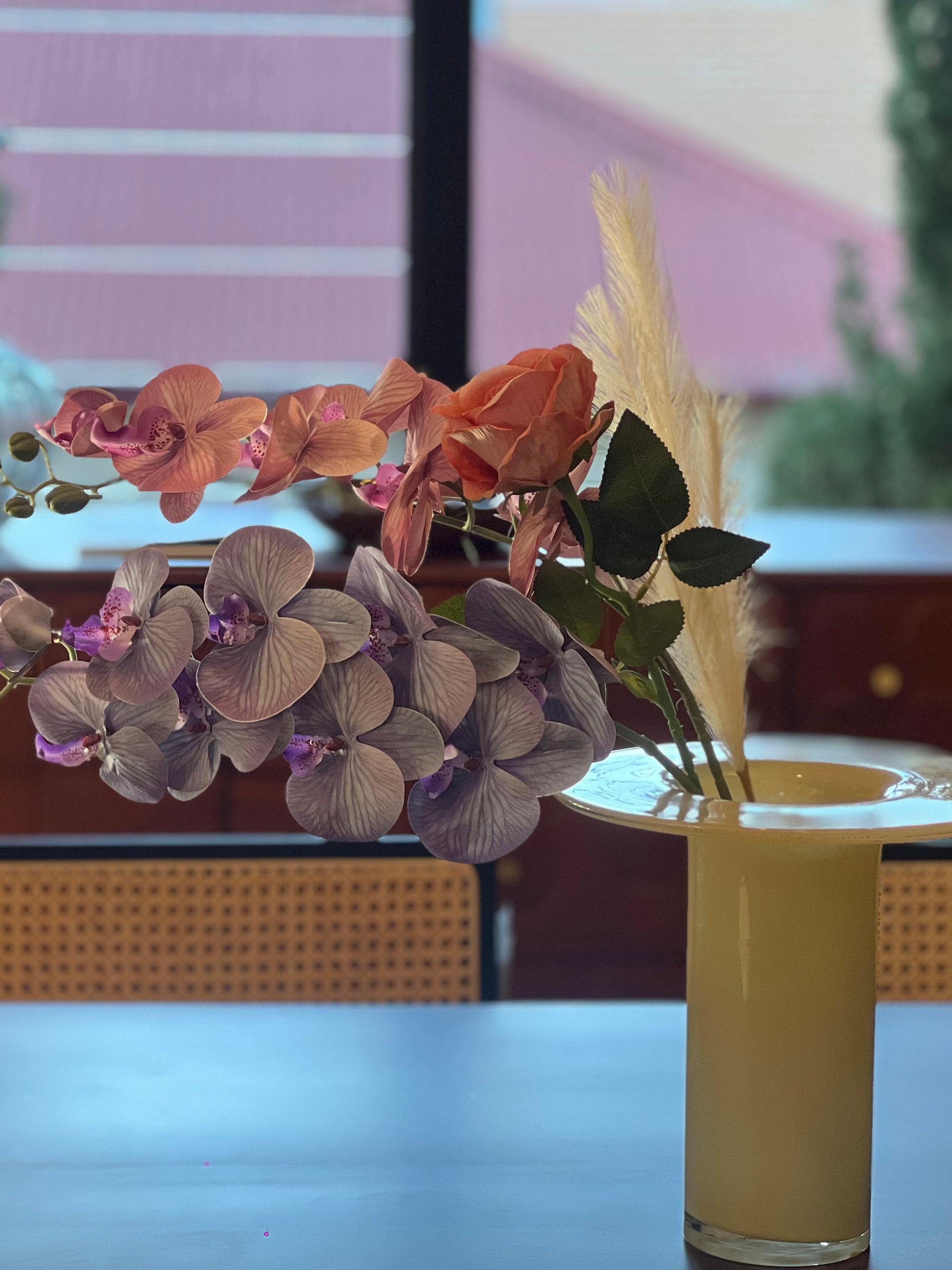
– Another chose a dark bookshelf niche, pairing a white-glazed ruffled vase with a muted purple hydrangea. The soft ambient light rendered it into a quiet still life.
- Emotional Echoes
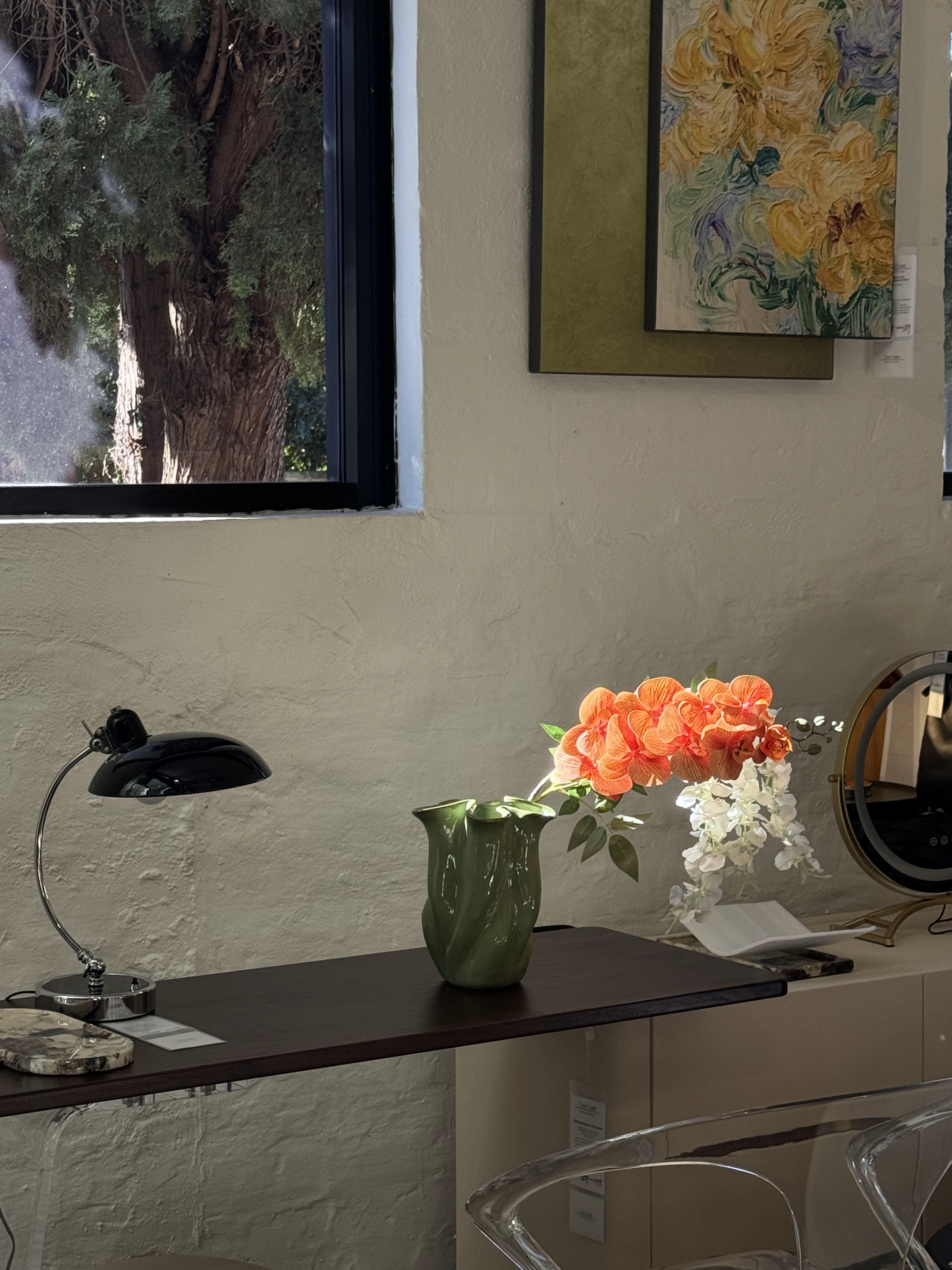
– A third inserted a stem of burnt-orange phalaenopsis into a deep green vessel, setting it on a dark wood console. Part of the arrangement fell into shadow, part was caught by sunlight—gently echoing the yellow oil painting beside it, the wooden wall behind, and the transparency of the acrylic chair below. It wasn’t placed at the center, nor trying to dominate the scene, but it added just the right amount of warmth—a subtle but undeniable presence.
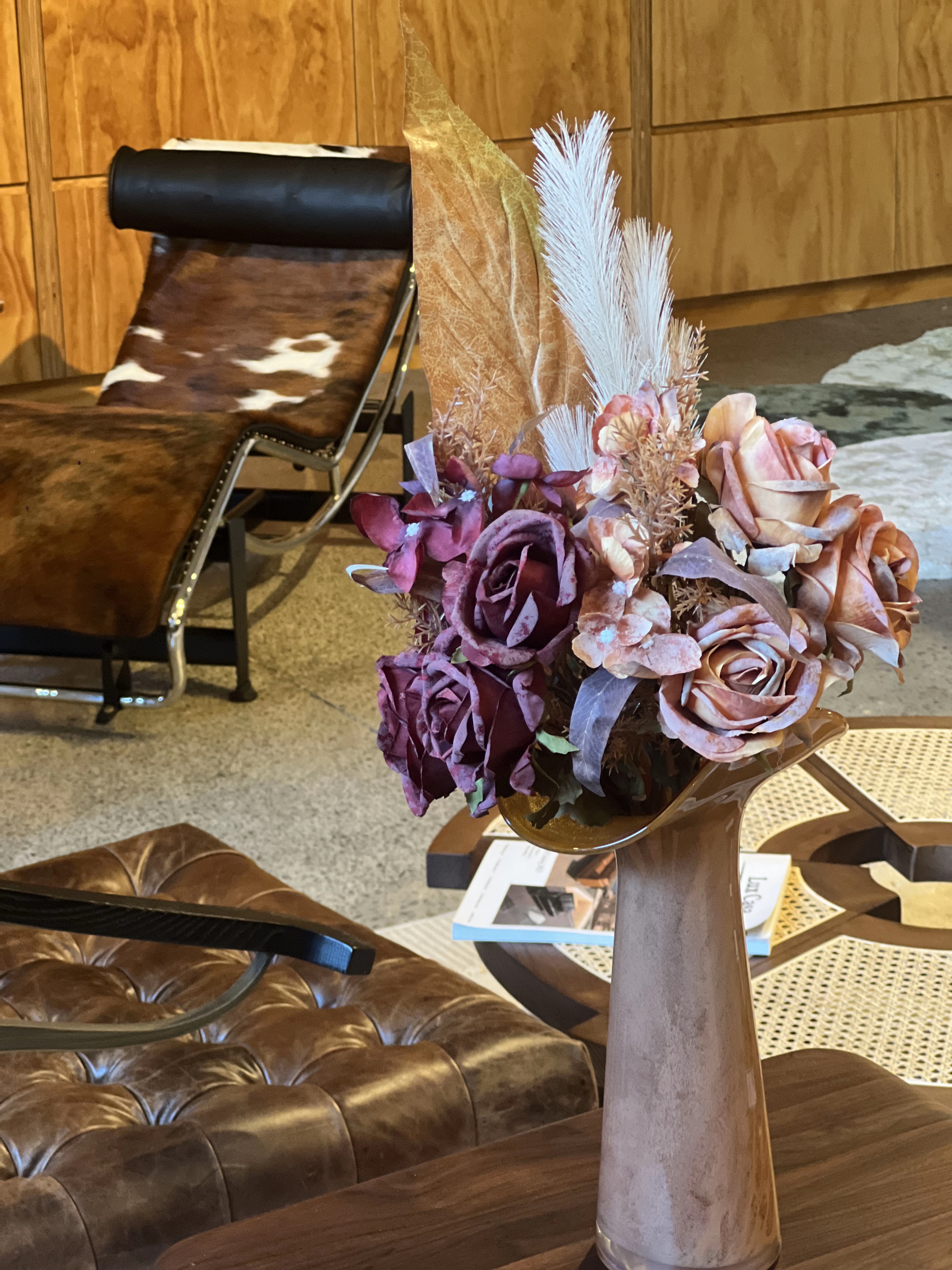
– One participant selected a cane-woven round coffee table, placing a bouquet of coral and violet florals into a pale amber vase. With afternoon light pouring in, the composition resonated with the brown leather seat and textured rug nearby, releasing the most unguarded, relaxed note of the space.
- The Art of Placing
Each corner became a touchpoint for emotion.
Each act of placement, a quiet murmur about what ‘living’ mean.
This event, at its core, was an aesthetic exercise staged in the everyday. One that sets aside technique or stylistic orthodoxy. And Lux Casa will continue to hold space for such micro-proposals, inviting you to join us in rethinking how we engage with objects, space, and feeling.
Because setting no rules does not mean embracing disorder—
It means turning each placement into an intentional act.
And within the small seams of the everyday, there is always room for creativity to unfold.
📍Visit Our Showroom: 122 O’Riordan St, Mascot, Sydney
🌐 Explore More Online: www.luxcasa.com.au